

Test & Tag in Port Stephens
- Test & tag
- AS/NZS 3760
- PORT STEPHENS SURROUNDS TO LOWER HUNTER
Why Testing & Tagging Matters
A frayed lead or a cracked plug is the kind of thing nobody notices until it trips a board or starts a fire. Work health and safety law requires employers to keep electrical equipment safe to use, and the Australian standard sets out how often that equipment should be inspected and tested. At Port Stephens Fire Protection, we handle test and tag for offices, workshops, kitchens, clubs and rental properties throughout Port Stephens. Every item gets a durable tag showing when it was tested and when it's next due, and you receive a register listing every appliance we've checked. We also hold NSW accreditation to issue Annual Fire Safety Statements, so most sites book this alongside their fire equipment servicing. It's all done in one visit. Call 0460 644 635 to get it scheduled.
What Our Testing Covers
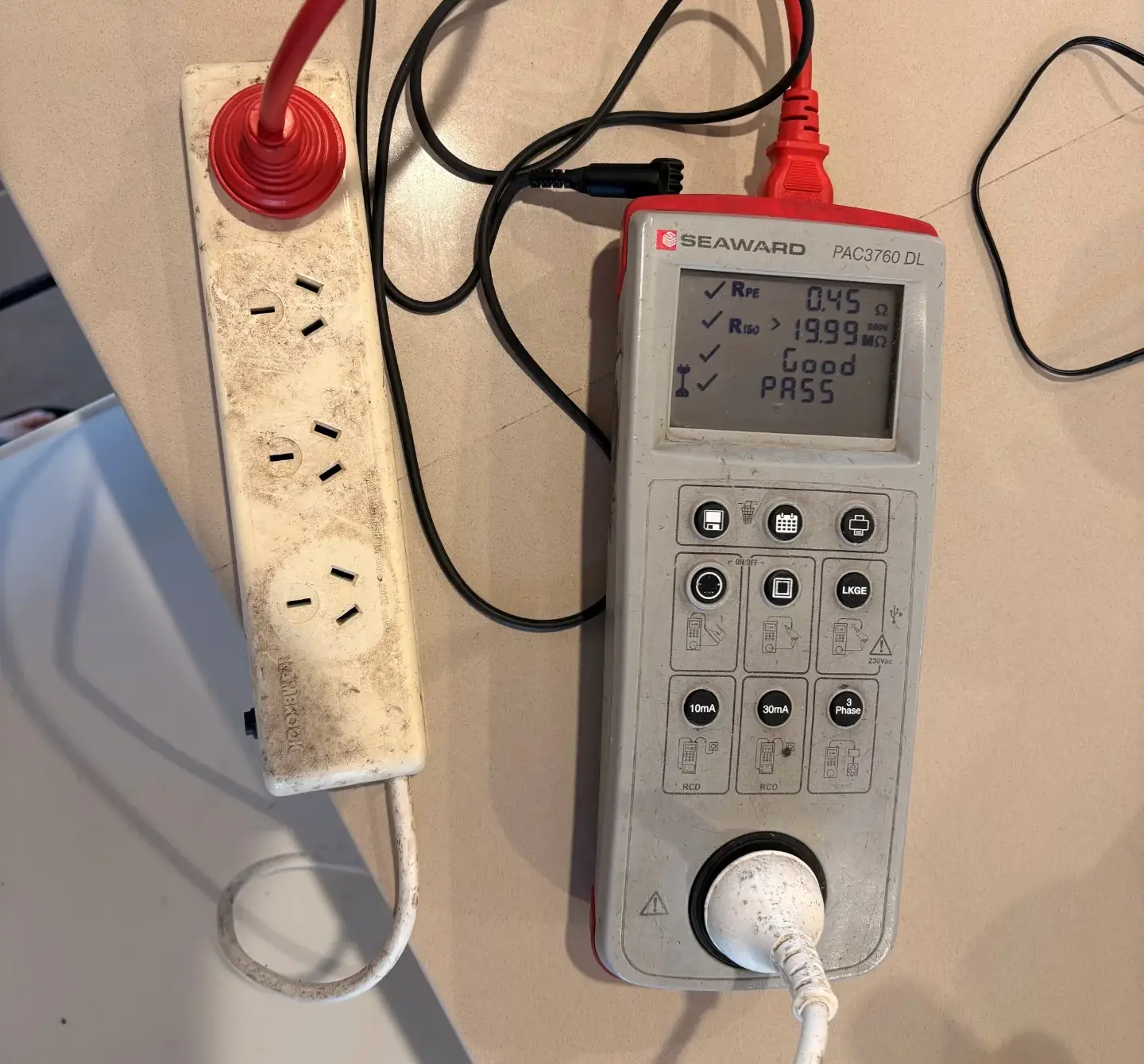
Here's what a test and tag visit from us includes.
- 01
Visual inspection of every item.
We check leads, plugs, casings and cords for damage or unsafe repairs before anything goes near the tester.
- 02
Electrical testing to the Australian standard.
Each appliance is tested for earth continuity, insulation resistance and polarity, with results recorded against that specific item.
- 03
Safety switch testing.
We run push-button and trip-time tests on RCDs, because a switch that trips too slowly is still a failure.
- 04
Tagging and reporting.
Every item is tagged with its test date and next due date, and you get an asset register you can hand straight to an auditor or insurer.
Call us to book an inspection, or send your details through and we'll come back to you with a time.
Testing intervals depend on the environment the equipment is used in, ranging from three months on construction sites to five years for low-risk office equipment. Factories, workshops and commercial kitchens usually sit at six or 12 months.
Work health and safety law requires employers to make sure electrical equipment is safe to use, and testing and tagging to the Australian standard is the accepted way of demonstrating that. On construction and demolition sites, regular testing is specifically required.
The item is tagged out of service and taken out of use so it can't be plugged back in by mistake. It then needs to be repaired and retested, or removed from the workplace and replaced.